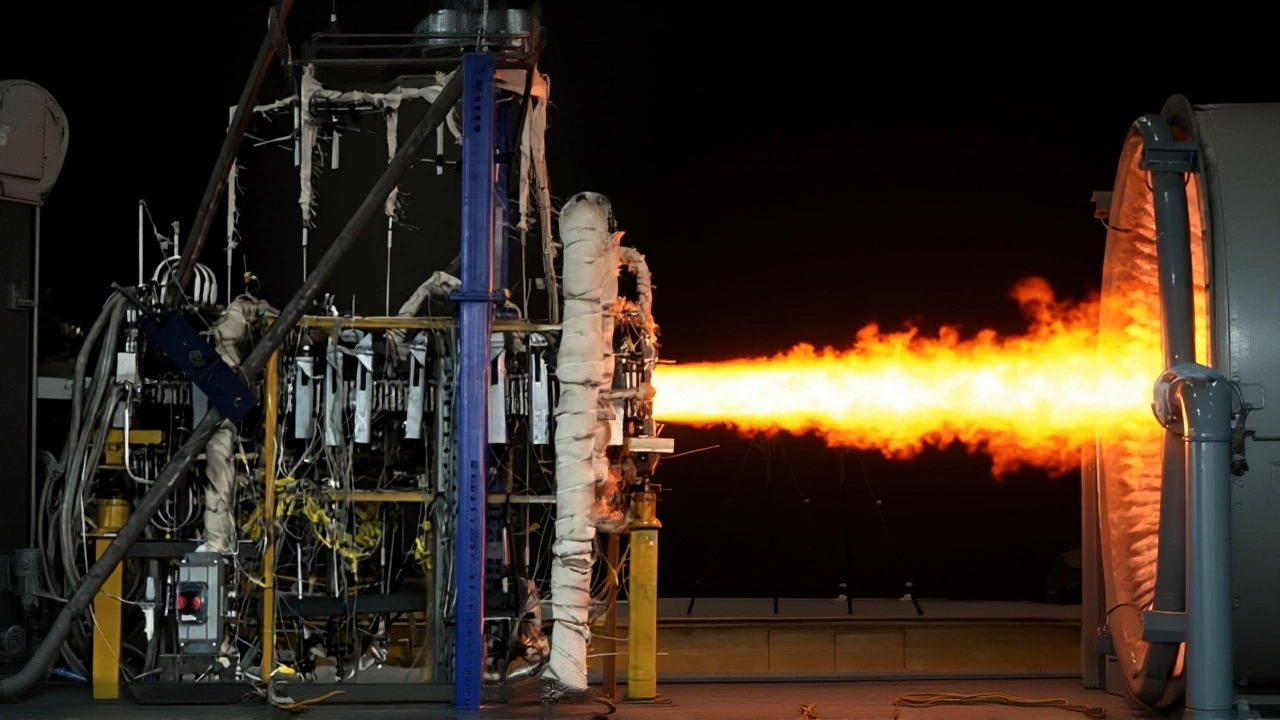
When Defence Research and Development Organisation (DRDO) announced the successful test of its advanced scramjet combustor for over 1,200 seconds, it wasn't just another technical milestone. It was a statement. Conducted at the Hyderabad-based Supersonic Combustion Ramjet Test Facility (SCPT), this run lasted nearly 20 minutes—a duration that experts say places India in an elite global club of nations mastering hypersonic propulsion.
The twist? This isn't the first time we've seen progress this year. In January, DRDO achieved a 700-second test. Now, they’ve almost doubled that figure. For context, surviving the extreme heat and pressure of hypersonic flight for even a few seconds is difficult. Doing it for 20 minutes changes the game entirely.
The Heat Behind the Speed
Here’s the thing about hypersonic weapons: speed kills, but heat kills faster. At Mach 5 and above, air friction generates temperatures that can melt conventional metals. That’s why the core challenge isn’t just going fast—it’s staying intact while doing so.
According to reports from the Defence Research and Development Laboratory (DRDL), the key to this success lies in two indigenous innovations: advanced thermal coatings and a proprietary fuel system. The engine used what is described as "liquid hydrocarbon endothermic fuel." Sounds complex, right? Think of it this way: instead of just burning to create thrust, this fuel absorbs heat from the engine walls as it breaks down chemically. It cools the engine from the inside out while providing massive energy output.
This dual-action capability means the combustor didn’t just survive; it thrived. The narrator of the report highlighted that earlier tests were considered major achievements on their own. To double that endurance suggests DRDO scientists have cracked the code on managing extreme thermal loads without relying on foreign technology.
A Foundation Built in Steel
So, why does this matter to you? Because hypersonic missiles are becoming the new standard for strategic deterrence. They’re too fast for current missile defense systems to intercept effectively.
Rajnath Singh, Defence Minister of India, didn’t mince words when addressing the breakthrough. He called this success an "iron-like strong foundation" for India’s hypersonic cruise missile program. His message was clear: "This is just a beginning. The real game is yet to come."
This isn't just rhetoric. With rivals like China and Russia already fielding or testing similar systems, India needed to close the gap quickly. By achieving this entirely indigenously—without external help—New Delhi signals that it no longer needs to wait for permission or partnerships to access top-tier military tech.

Sky High, Sea Deep: A Dual Front Advance
But wait, there’s more. While DRDO was pushing boundaries in the sky, another critical development was underway beneath the waves. Reports indicate India has started developing its own Ring Laser Gyroscopes (RLG) for submarines.
Why is this significant? GPS doesn’t work underwater. Submarines traditionally rely on inertial navigation systems (INS) using mechanical gyroscopes. These devices accumulate errors over time—a drift of just 100 kilometers can mean missing a target by miles. In nuclear warfare, that margin for error doesn’t exist.
An RLG uses laser beams traveling in opposite directions through a mirrored triangular path to detect rotation with near-perfect accuracy. No moving parts, no drift. Currently, only four or five countries globally possess the ability to manufacture these sensitive components. By bringing this production home, India ensures its nuclear-armed submarines remain precise navigators, regardless of whether enemy forces jam satellite signals or destroy orbital assets.
What Comes Next?
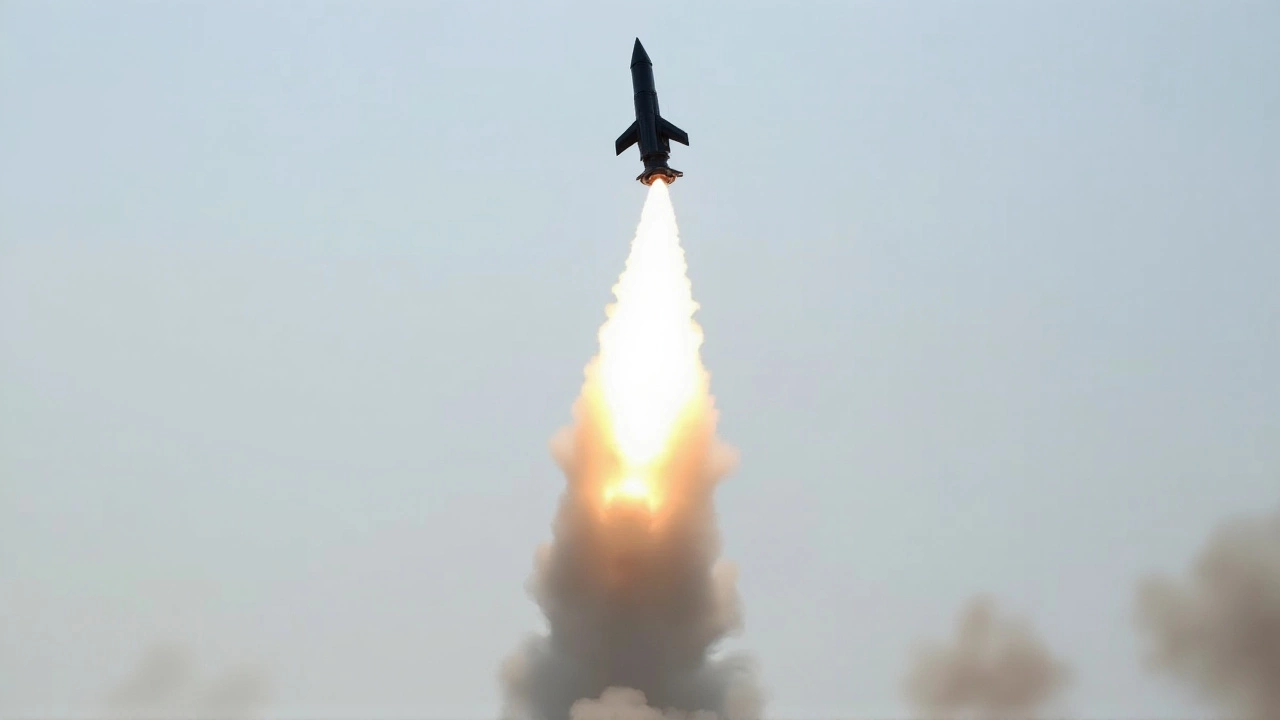
The implications are staggering. We are looking at a scenario where India possesses both the delivery mechanism (hypersonic missiles) and the precision guidance (indigenous RLGs) for a credible second-strike capability.
Analysts suggest this could shift regional dynamics significantly. If Beijing or Islamabad assumes India relies on imported navigation tech, they may underestimate the resilience of Indian naval assets. This new autonomy removes that vulnerability.
However, challenges remain. Moving from a lab-tested combustor to a fully integrated missile requires years of further testing, integration with warheads, and deployment trials. The "real game" Singh mentioned will likely involve live-fire tests and operational deployment timelines expected in the late 2020s.
Frequently Asked Questions
What exactly is a scramjet combustor?
A scramjet (Supersonic Combustion Ramjet) is an air-breathing jet engine designed to operate at hypersonic speeds (Mach 5+). Unlike traditional rockets that carry their own oxygen, scramjets use atmospheric oxygen for combustion. The "combustor" is the chamber where fuel mixes with supersonic airflow and burns. Testing it for 1,200 seconds proves the engine can sustain stable combustion under extreme heat and pressure for extended periods.
Why is liquid hydrocarbon endothermic fuel important?
This special fuel serves two purposes. First, it provides high-energy thrust for speed. Second, as it flows through the engine walls before combustion, it undergoes a chemical reaction that absorbs heat (endothermic process). This cools the engine structure from the inside, preventing meltdown during hypersonic flight. It’s a self-cooling solution developed entirely in Indian labs.
How does this compare to previous tests?
In January of this year, DRDO successfully tested a scramjet combustor for 700 seconds. The recent 1,200-second test nearly doubles that duration. In the world of hypersonics, doubling endurance is not linear improvement; it represents a massive leap in thermal management and material science capabilities, moving closer to operational viability.
What is the significance of the Ring Laser Gyroscope (RLG)?
RLGs provide ultra-precise navigation for submarines without relying on GPS, which doesn’t penetrate water. Traditional mechanical gyroscopes drift over time, causing navigation errors. RLGs use light interference to measure rotation with zero drift. Indigenous production ensures India’s nuclear submarines can navigate accurately even if all satellite communications are destroyed in a conflict.
Does this mean India has deployed hypersonic missiles?
Not yet. This test involved the combustor component, a critical part of the propulsion system. Integrating this into a full missile vehicle, adding guidance systems, and conducting live-flight tests takes additional time. Defence Minister Rajnath Singh described this as a "foundation," implying that operational deployment is still in the future, likely several years away.